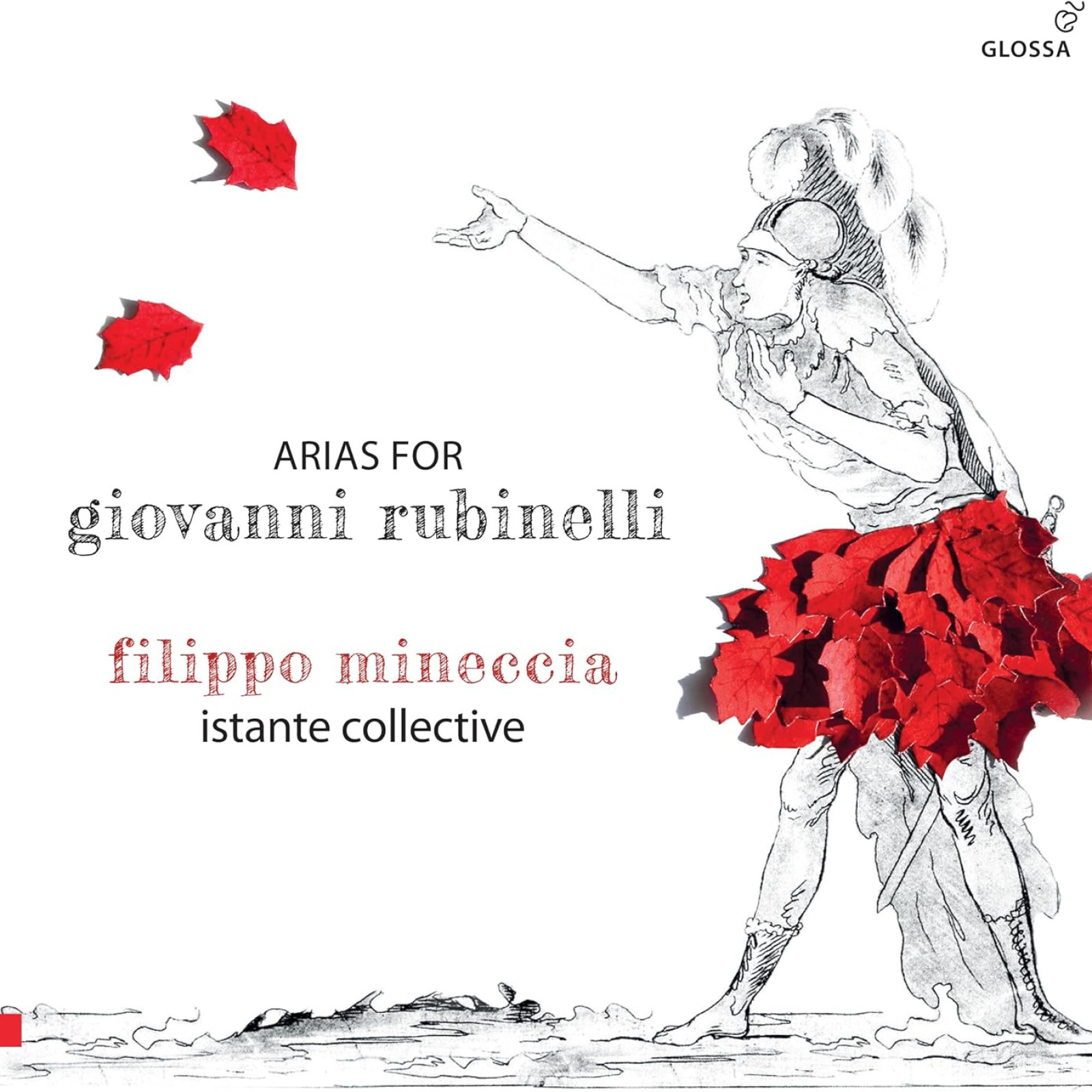
Filippo Mineccia and Istante Collective's latest album with the Glossa Harmonia Mundi record label has been marked as Classic Voice's Disc of the Month, given a five star review in the italian music magazine's September 2026 issue.
The following has been translated from italian, directly from the review.
“Not sterile displays of virtuosity, but rather expressions of tumultuous states of mind”
Classic Voice: Disc of the MonthArias for Giovanni RubinelliCountertenor: Filippo MinecciaEnsemble: Istante CollectiveCD: Glossa Harmonia Mundi, GCD923544★★★★★
Following his highly successful monographic CDs devoted to Paisiello, Jommelli and Vinci, in this recording Mineccia explores the vast operatic repertoire of the post-Handelian and pre-Rossinian period, broadly contemporary with Mozart. It was in precisely this repertoire that the castrato Giovanni Rubinelli, to whom Mineccia dedicates the album, distinguished himself.
We cannot, of course, know what his voice actually sounded like; but the vocal writing presented here suggests a contralto timbre which, alongside the indispensable passages of dizzying coloratura, gave particular weight to their expressive significance. Handel, in short, had been heard and absorbed by the great host of composers of the Neoclassical period following Gluck, some now forgotten (Andreozzi, Tarchi, Bianchi, Mortellari, Nasolini, Bresciani, Lenzi), others neglected despite deserving greater recognition, such as Traetta, Sacchini and Anfossi.
All these arias are perfectly suited to Mineccia’s dark and distinctive timbre, which his formidable technique enhances through a soft, flexible and even vocal line, ranging from full-bodied, harmonically rich low notes to luminous high notes. He is capable of firm, flowing legato, providing the finest material for an exceptionally varied palette of expression. Although this finds its ideal territory in music of elegiac, heartfelt and piercing melancholy, it by no means prevents him from reaching great heights of virtuosity. There is, for example, an aria by Francesco Bianchi, “Se fedel mi serbi amore” from the opera Cajo Mario, containing fiendishly difficult leaps of a thirteenth, executed impeccably. Yet these are rendered not as sterile displays of virtuosity, but always as expressions of tumultuous states of mind.
Excellent support is provided by the Istante Collective, led by first violin Beatrice Scaldini, and, in three beautiful duets by Salieri, Handel and Paisiello, by the accomplished soprano Alexandra Tarniceru.
A perfect recording, and a booklet containing the complete sung texts (and what marvellous verses librettists used to pour forth in those days...).